heyuan962568@gmail.com
+86 18730808985
Hebei, China
Phone: +86 18730808985
Email: heyuan962568@gmail.com
Contact: zihao zu — Sales Director
Moving a patient from a care bed to a rehabilitation or treatment area can involve several stages. Caregivers need to position the transport equipment beside the bed, create convenient lateral access, adapt the working height, secure the trolley before transfer and then move the patient through corridors and other care spaces.
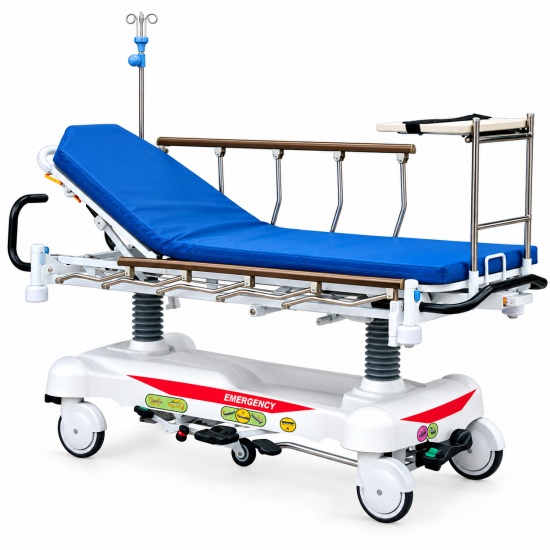
The JH-PC101 hydraulic patient transfer trolley is designed to support this complete workflow. It combines 630–930 mm hydraulic height adjustment, a 320 kg safe working load, multi-position patient support, folding stainless steel side rails, central braking and a retractable fifth wheel.
An X-ray translucent HPL patient platform, integrated oxygen cylinder tray, IV pole system and large 200 mm casters further extend its functionality for rehabilitation centers and professional assisted-care facilities.
The JH-PC101 uses two hydraulic cylinders to control the overall height of the patient platform. The working height can be adjusted between approximately 630 mm and 930 mm.
This provides greater flexibility when positioning the trolley alongside nursing beds and other patient-support equipment with different surface heights.
For patients who cannot transfer independently, the relationship between the bed surface and the transport platform is an important part of the handling process.
Rather than using a fixed-height trolley, caregivers can adjust the JH-PC101 according to the transfer situation before patient movement begins.
The trolley is equipped with stainless steel folding side rails measuring approximately 1240 mm in length. When raised, the rails extend approximately 430 mm above the patient platform.
The locking points use reinforced zinc die-cast components to provide a secure locking structure during routine operation.
When caregivers need direct lateral access, the side rail can be folded down before the transfer begins.
After the patient has been positioned correctly, the rail can be returned to its protective position before transportation. This makes the rail system useful during both patient handling and movement through the facility.
The back section can be adjusted from 0° to approximately 85°. Two gas springs provide assistance during backrest positioning.
This allows the patient to remain flat or move into a substantially raised upper-body position according to the care requirement.
The knee section provides an adjustment range of approximately 0–40°. A manual crank is supplied for operating this function.
The patient platform also provides approximately 0–18° of tilt adjustment.
These positioning functions allow the trolley to support different patient positions during transfer preparation, transportation and temporary care.
The JH-PC101 has a specified safe working load of 320 kg.
This provides rehabilitation and care facility buyers with a clearly defined load specification when selecting equipment for patients requiring full-length support during transportation.
The required safe working load should always be evaluated together with the intended patient population, transfer procedure and facility requirements.
Four 200 mm medical casters support movement between different areas of the facility.
The large-diameter caster configuration works together with the steering and braking systems to create a complete mobile chassis rather than relying on individual swivel wheels alone.
An independent central fifth wheel is integrated into the chassis. Control pedals are positioned on both sides of the trolley.
When engaged, the fifth wheel helps maintain directional control during longer straight transport routes. This can be useful when moving patients along corridors between care rooms and rehabilitation or treatment areas.
When the central wheel is raised, the trolley returns to free movement on its four main casters.
Caregivers can therefore use directional guidance on longer routes and switch back to more flexible maneuvering when entering rooms or repositioning the trolley.
The four 200 mm casters are connected to a central braking system. Foot-operated controls allow the caster system to be secured without individually operating four separate wheel brakes.
This is particularly useful before bed-to-stretcher transfer, patient repositioning or other procedures where the trolley needs to remain stationary.
The central brake linkage uses an integrated round-tube structure to provide additional structural strength during repeated operation.
A transfer trolley may have suitable clinical functions but still be difficult to use if the facility route has not been considered before purchase.
The JH-PC101 has an overall size of approximately 2140 × 910 mm, with a specified width of approximately 880 mm when the side rails are raised.
Before procurement, buyers should compare the equipment dimensions with the intended doorways, corridors, elevators and turning areas along the patient transfer route.
For rehabilitation and assisted-care projects, equipment selection should consider the complete journey from the patient's bed to the destination rather than evaluating the stretcher only inside one room.
The fifth-wheel steering system and free-caster mode are designed to provide different maneuvering characteristics as the trolley moves through these environments.
The patient platform is manufactured from HPL material and measures approximately 1926 × 620 × 6 mm.
The platform provides a high-strength support surface and allows X-ray transmission through the material.
This adds additional clinical flexibility for professional care facilities where diagnostic imaging access may form part of the patient's treatment or rehabilitation pathway.
A storage tray is integrated beneath the patient platform and can be used to carry an oxygen cylinder during transportation.
The tray has a specified load capacity of 20 kg, allowing compatible respiratory support equipment to move together with the trolley when required.
One IV pole is included in the standard configuration, together with four standard IV pole sockets.
The trolley also incorporates a dedicated IV pole storage holder, allowing the pole to be stored on the equipment when it is not in active use.
This configuration supports patients who need infusion equipment to remain available while moving between different care areas.
The standard mattress measures approximately 1840 × 600 × 80 mm.
Its outer fabric has a water-resistant surface treatment and incorporates a zipper. The external cover can be removed for washing as part of routine equipment cleaning.
This is a practical consideration for shared transfer equipment used for multiple patients within a professional care facility.
Move the trolley to the required side of the bed and use the hydraulic system to adjust the platform height according to the transfer situation.
Secure the caster system before beginning patient handling.
Fold down the stainless steel side rail to provide closer lateral access for the assisted transfer.
After the patient is on the trolley, the backrest, knee section and platform position can be adjusted according to the care requirement.
Return the folding side rail to its protective position and confirm that it is securely locked before transportation.
Use the fifth wheel when directional guidance is useful on longer routes, or retract it when greater maneuverability is required.
After reaching the rehabilitation or treatment area, engage the central brake before beginning the next patient handling procedure.
Four 70 × 80 mm bumper wheels are positioned around the corners of the trolley.
They provide additional perimeter protection when the equipment is moved through doorways, corridors and other areas where contact with surrounding structures may occur.
Model: JH-PC101.
Product Type: Hydraulic Patient Transfer Trolley / Hydraulic Patient Stretcher.
Overall Size: 2140 × 910 × 630–930 mm.
Width with Side Rails Raised: 880 mm.
Patient Platform Size: 1926 × 620 × 6 mm.
Height Adjustment: 630–930 mm.
Height Adjustment System: Dual hydraulic cylinders.
Backrest Adjustment: 0–85°.
Backrest System: Gas-spring assisted.
Knee Section Adjustment: 0–40°.
Knee Adjustment: Manual crank.
Tilt Adjustment: 0–18°.
Safe Working Load (SWL): 320 kg.
Patient Platform: X-ray translucent HPL.
Frame: High-strength steel construction.
Side Rails: Stainless steel folding side rails.
Side Rail Length: 1240 mm.
Side Rail Height Above Platform: 430 mm.
Casters: 4 × Ø200 mm central-locking medical casters.
Brake System: Central braking system.
Directional System: Retractable central fifth wheel.
Corner Protection: 4 × 70 × 80 mm bumper wheels.
Lower Storage: Integrated oxygen cylinder tray, 20 kg load capacity.
IV Pole: 1 pc.
IV Pole Sockets: 4 standard sockets.
IV Pole Storage: Integrated storage holder.
Mattress Size: 1840 × 600 × 80 mm.
Mattress Cover: Water-resistant, zippered and removable for washing.
Optional Accessory: Patient record table / chart table.
The JH-PC101 is intended for professional environments where mobility-limited patients require full-length support during transportation. Its hydraulic height adjustment, multi-position patient support, central braking and dual-mode steering system allow the trolley to adapt to different stages of assisted patient movement.
For rehabilitation and professional care projects, buyers should consider the stretcher together with the beds, room dimensions and transfer routes used throughout the facility.
Explore our Patient Transfer Equipment range for additional patient transport and handling solutions.
You can also explore our Nursing Bed range for additional patient-care equipment.
For technical specifications, project quantities, available configurations or OEM/ODM requirements, contact us with your project requirements.

The nursing beds meet our daily care requirements very well. The products arrived in good condition, and the overall purchasing experience was smooth and professional.

We were looking for a supplier that could provide stable quality and flexible OEM service. Their responsiveness and product consistency have helped us grow our business.
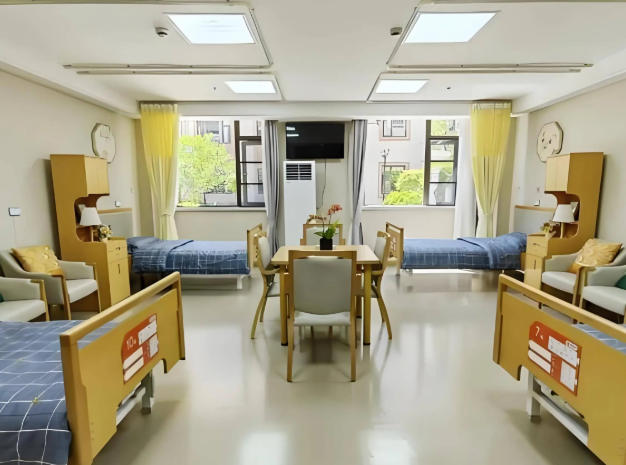
The care beds are comfortable, easy to operate, and well received by both residents and caregivers. The team provided helpful support throughout the purchasing process.
We have purchased care beds for several projects, and the product quality has been consistent. Communication was clear, and delivery was arranged on schedule. A reliable supplier to work with.
Yes. We provide OEM and ODM services for care beds, nursing beds, and healthcare furniture, including customization of functions, colors, logos, packaging, and specifications.
Our products are manufactured under ISO 9001 and EN ISO 13485 quality management systems. Specific certifications may vary depending on the product model and market requirements.
Production time depends on the product type and order quantity. Most standard care bed orders can be arranged within the agreed production schedule.
MOQ varies by product model. Please contact us with your requirements, and we will recommend the most suitable purchasing solution.
Yes. We provide product guidance, technical documentation, and responsive after-sales support to help customers use and maintain our care beds efficiently.
Send us your requirements today and receive fast support, product details, and factory pricing within 24 hours.
+86 18730808985
Mon-Fri, 8am-6pm CST
heyuan962568@gmail.com
We reply within 24 hours
+86 18730808985
Instant messaging available
Yintai Industrial Park, Jizhou District, Hengshui City, Hebei Province, China
