heyuan962568@gmail.com
+86 18730808985
Hebei, China
Phone: +86 18730808985
Email: heyuan962568@gmail.com
Contact: zihao zu — Sales Director
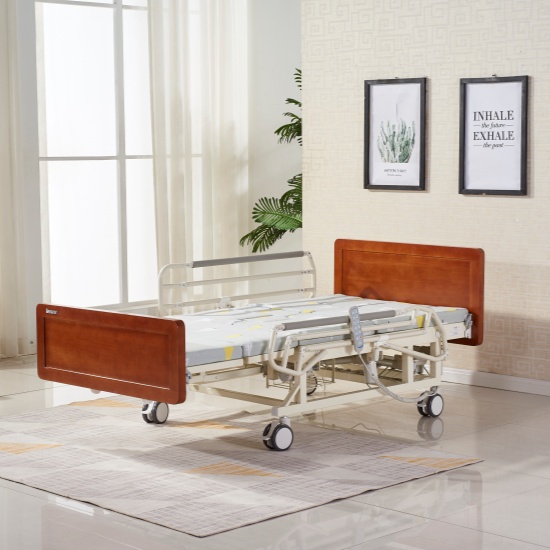
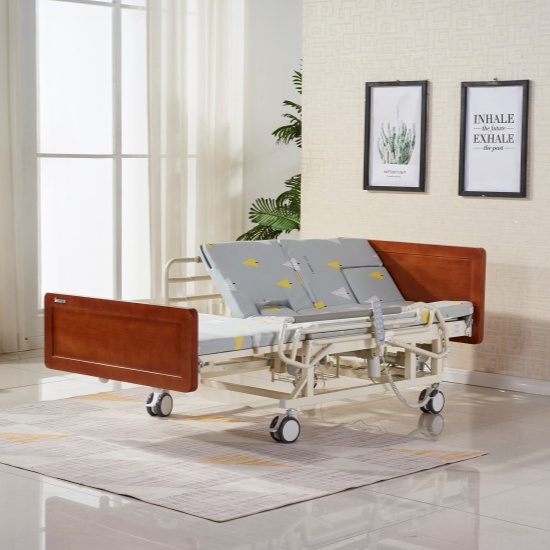
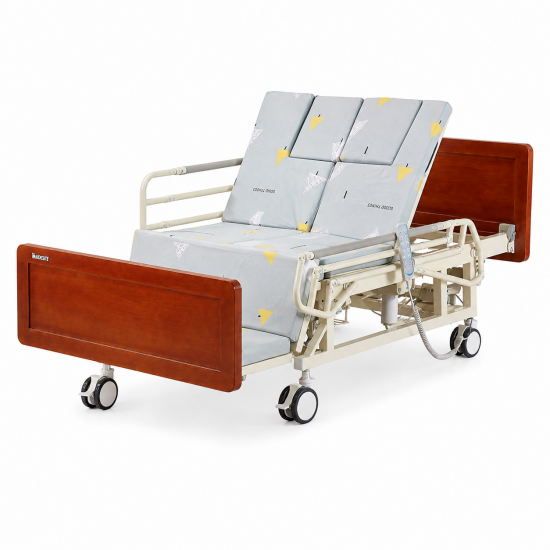
When long-term nursing moves into the home, buyers often face a difficult choice. The user may need professional positioning and turning assistance, but a conventional medical bed can make the bedroom feel unnecessarily clinical. This electric turning home care bed is designed to address both requirements.
The bed combines assisted left and right turning with electric backrest and leg positioning for users with limited mobility. At the same time, wooden head and foot boards create a warmer furniture-style appearance, while three-section folding side rails provide flexible access for everyday bedside care.
This combination makes the model particularly suitable for long-term home care, private elderly care and residential environments where the bed is expected to remain part of the user's living space for an extended period.
For a person who cannot turn independently, changing position can become one of the most repetitive tasks in daily care. This model incorporates an electric lateral turning system into the segmented sleeping platform, providing mechanical assistance when the user needs to be repositioned toward either side.
The turning movement gives family members or professional caregivers another way to manage routine repositioning without relying entirely on manual handling.
The supporting mattress sections follow the movement of the articulated bed platform during lateral positioning. This allows the user to remain supported as the bed assists the change of position.
For buyers whose care requirements extend beyond those of a conventional Nursing Bed, this turning structure provides a more specialized solution for users who spend extended periods in bed.
Long-term home care is not only about sleeping. Users may eat, read, communicate with family members and perform many everyday activities while remaining in bed.
The electric backrest can raise the upper body from a flat position toward a more upright posture. This provides useful positioning support during meals, drinking, conversation and other activities where remaining completely flat would be inconvenient.
For users unable to sit up independently, the electric backrest also reduces the need for caregivers to repeatedly lift the upper body manually. The required position can be adjusted through the electric control system according to the user's daily routine.
The leg section provides additional electric positioning options and can be used together with the backrest to create different resting postures.
Combining back, leg and lateral adjustments allows the same bed to support several different positions throughout the day without repeatedly moving the user to another piece of equipment.
One of the strongest visual features of this model is its wooden head and foot board design. The warm wood finish gives the bed a more furniture-like appearance than conventional ABS medical panels.
This difference becomes particularly relevant in home care. A hospital-style bed may be appropriate for short-term treatment, but users receiving long-term care often spend months or longer with the same equipment in their bedroom.
The wooden panels help the bed integrate with residential furniture and create a less institutional visual impression. Buyers therefore do not have to choose between a purely medical appearance and the positioning functions required for more demanding nursing care.
This makes the model especially suitable for families and home healthcare providers looking for advanced care functions while still considering the appearance of the user's living environment.
The bed is equipped with three-section folding side rails rather than a single continuous side barrier. This segmented structure allows caregivers to manage bedside access according to the task being performed.
When side protection is required, the rails can remain in their raised position. When closer access is needed for hands-on care, the relevant sections can be folded down to open the bedside area.
Caregivers may need access around the upper body for repositioning, around the central area for personal care or around the lower section for other routine tasks. A segmented rail system provides greater flexibility than opening one full-length rail every time.
This is particularly useful in home care, where one family caregiver may be responsible for several different bedside tasks throughout the day.
Choosing a home care bed should involve more than comparing the number of electric functions. Buyers should consider what actually happens during a normal day: How often does the user need help turning? Can the person sit up independently? How frequently does the caregiver need access from the side of the bed?
This model is designed around those repeated tasks. Electric turning assists with repositioning, backrest adjustment supports sitting, leg positioning provides additional posture options, and folding rails make hands-on bedside access more convenient.
A long-term care bed is used by two groups of people: the person lying in it and the caregiver working around it. Functions that improve user positioning while also simplifying repeated caregiver tasks can provide greater practical value than features selected only from a specification list.
Suitable for users who spend extended periods in bed and require regular assistance changing their position.
The electric positioning system provides additional support for elderly users who have difficulty sitting up, adjusting their posture or turning independently.
The bed can also be considered for longer recovery periods where the user continues to require positioning assistance after leaving a hospital or rehabilitation facility.
Home healthcare providers can use the bed when more extensive nursing functions are required than a conventional adjustable home care bed can provide.
A conventional electric home care bed may focus primarily on backrest adjustment, leg positioning and overall bed adjustment. These functions are suitable for many elderly users who retain a reasonable level of independent movement.
This model is intended for users with greater dependency. The integrated turning system adds assisted lateral repositioning to the normal electric positioning functions, making the bed more appropriate when regular turning has become part of everyday care.
The wooden panels are equally important to this product's positioning. Instead of simply adapting a clinical hospital bed for use in a bedroom, the design combines long-term nursing functions with a more residential appearance from the beginning.
If the user can still change position independently, a simpler electric nursing bed may be sufficient. If caregivers already need to assist with regular turning, a dedicated Turning Nursing Bed may provide more practical value.
For temporary care, appearance may be a secondary consideration. For long-term use in a bedroom, however, wooden head and foot boards can help the equipment feel more appropriate within the surrounding living space.
Where caregivers perform regular hands-on care from the bedside, three-section folding rails provide flexibility by allowing different areas to be opened according to the task.
This electric turning home care bed combines two requirements that are increasingly important in long-term care: practical assistance for users with limited mobility and a design that feels appropriate in a residential environment.
Electric lateral turning, backrest adjustment and leg positioning support everyday repositioning needs, while wooden head and foot boards create a warmer appearance. Three-section folding rails further improve access when caregivers need to work directly beside the user.
For home healthcare suppliers, elderly care distributors and long-term care projects, different configurations are available within our Turning Nursing Bed range to match different levels of mobility and nursing requirements.
For detailed specifications, configuration options, wholesale purchasing or OEM/ODM requirements, please contact us for further information.

The nursing beds meet our daily care requirements very well. The products arrived in good condition, and the overall purchasing experience was smooth and professional.

We were looking for a supplier that could provide stable quality and flexible OEM service. Their responsiveness and product consistency have helped us grow our business.
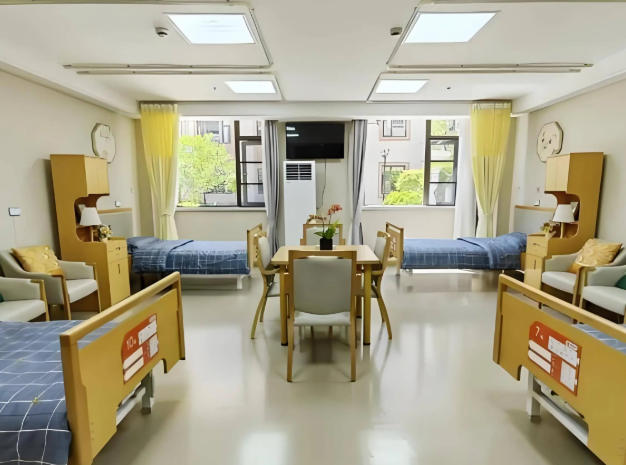
The care beds are comfortable, easy to operate, and well received by both residents and caregivers. The team provided helpful support throughout the purchasing process.

We have purchased care beds for several projects, and the product quality has been consistent. Communication was clear, and delivery was arranged on schedule. A reliable supplier to work with.
Yes. We provide OEM and ODM services for care beds, nursing beds, and healthcare furniture, including customization of functions, colors, logos, packaging, and specifications.
Our products are manufactured under ISO 9001 and EN ISO 13485 quality management systems. Specific certifications may vary depending on the product model and market requirements.
Production time depends on the product type and order quantity. Most standard care bed orders can be arranged within the agreed production schedule.
MOQ varies by product model. Please contact us with your requirements, and we will recommend the most suitable purchasing solution.
Yes. We provide product guidance, technical documentation, and responsive after-sales support to help customers use and maintain our care beds efficiently.
Send us your requirements today and receive fast support, product details, and factory pricing within 24 hours.
+86 18730808985
Mon-Fri, 8am-6pm CST
heyuan962568@gmail.com
We reply within 24 hours
+86 18730808985
Instant messaging available
Yintai Industrial Park, Jizhou District, Hengshui City, Hebei Province, China
